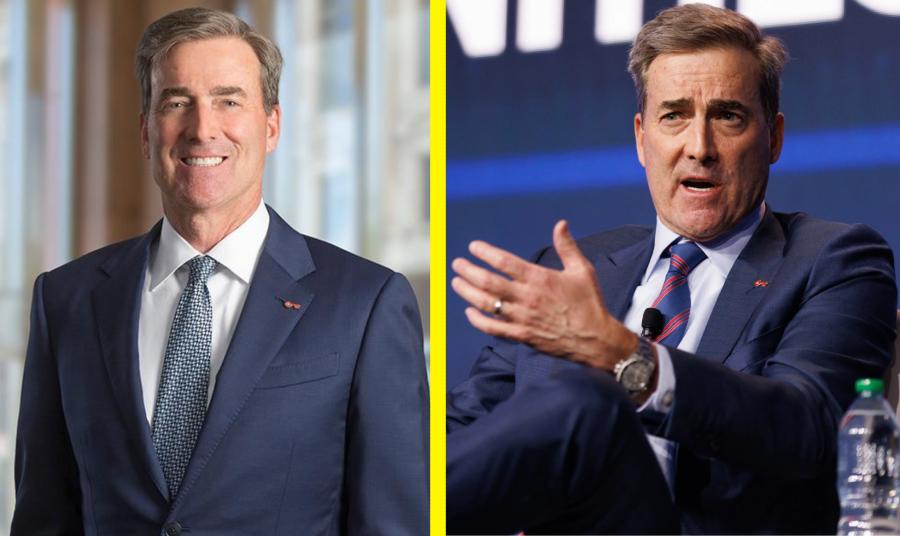
If you follow regional banking at all, you’ve probably run into the name Chris Gorman more than once. He runs KeyCorp, the Cleveland-based parent of KeyBank, and he’s been at the helm during one of the most eventful stretches in the company’s long history. He isn’t the loudest CEO in the room, and he doesn’t chase headlines the way some of his peers do. But spend a little time looking at what he’s actually done, and a clear picture emerges of a banker who knows exactly what he wants Key to be. This article takes a closer look at the man behind the title, how he got there, and why his decisions matter well beyond Ohio.
Who Is Christopher M. Gorman?
Christopher M. Gorman is the Chairman, Chief Executive Officer, and President of KeyCorp, which sits among the largest bank-based financial services companies in the United States. That’s a mouthful of titles, but it boils down to one thing: he’s the person ultimately responsible for a sprawling franchise that manages roughly $189 billion in assets, employs close to 18,000 people, and serves about 3.5 million clients. He brings more than three decades of financial services experience to the job, and you can feel that depth in the way he talks about the business. He tends to frame everything around three priorities he repeats often: delivering value for shareholders, keeping the client experience front and center, and investing in the communities Key operates in.
From Indianapolis to the Cleveland Corner Office
Gorman wasn’t born into Cleveland banking royalty. He grew up in Indianapolis and didn’t land in Cleveland until 1991, which is worth remembering because Key is so deeply woven into the city’s identity today. He earned a bachelor’s degree in finance from Miami University in Ohio back in 1983, and that finance grounding shows up constantly in how he reasons about capital, risk, and growth. There’s a certain Midwestern steadiness to his public persona, the kind of executive who would rather under-promise and over-deliver than make a splash he can’t back up. It’s a style that has served him well in an industry where overconfidence has sunk more than a few careers.
Climbing the Ladder at KeyCorp
One thing that stands out about Gorman is that he’s a true insider, not a hired gun parachuted in from a rival. He joined the bank in 1998 through Key’s acquisition of McDonald Investments, a registered broker-dealer where he’d already built a reputation in leadership roles. From there he climbed steadily, leading KeyBanc Capital Markets and later running Key Corporate Bank, the unit housing real estate capital, commercial payments, equipment finance, and the capital markets arm. He was named Chairman and CEO of KeyBank, N.A. in 2012, became President and Chief Operating Officer of the parent company in September 2019, and finally took over as Chairman and CEO on May 1, 2020. That’s a slow, deliberate ascent built on knowing the institution from the inside out, which matters when you’re trying to steer a 200-year-old franchise.
The First Niagara Deal That Made His Name
Long before he had the top job, Gorman earned his stripes on one of the trickiest assignments a banker can draw: integrating a major acquisition. He led Key’s integration of First Niagara Financial Group, which stands as the largest acquisition in the company’s two-century history. Anyone who has lived through a bank merger knows these deals look great on a slide and turn into a nightmare in execution. Systems don’t talk to each other, cultures clash, and customers get nervous. Pulling off a smooth integration of that scale is the kind of thing that quietly tells a board, “this person can handle complexity under pressure.” It’s no exaggeration to say that project helped pave his path to the CEO chair.
The Scotiabank Investment: A Defining Move
If there’s one chapter that will define Gorman’s tenure, it’s the Scotiabank deal. In 2024, the Bank of Nova Scotia agreed to take a minority stake in KeyCorp, eventually landing at roughly 14.9% ownership for about $2.8 billion. Gorman framed it as an opportunity that arrived on attractive terms, letting Key accelerate its capital and earnings improvement while strengthening its strategic position. The cash gave the bank room to reposition its securities portfolio and shore up its capital ratios, with management pointing to a CET1 capital ratio landing in the low-eleven-percent range. In plain English, the deal handed Key a healthier balance sheet and more flexibility to grow. As part of the arrangement, Scotiabank also placed two of its own people on Key’s board, expanding it to fifteen members.
Why That Deal Still Sparks Debate
Not everyone cheered. The Scotiabank stake has remained a lightning rod, partly because of what it signals about Key’s independence. Critics have wondered aloud whether a “passive investment” with board seats and talk of strategic alignment starts to look like something closer to a slow-motion takeover. Gorman, for his part, has consistently characterized it as a capital and partnership opportunity rather than a prelude to losing control. The company has also pointed to the deal generating ongoing tailwinds for its earnings, citing the investment and the related balance-sheet repositioning as drivers of a stronger profit trajectory. Whether the partnership eventually deepens or stays where it is, it has reshaped how investors think about Key’s future.
Pushback, Pressure, and the Activist Spotlight
Running a bank means living with second-guessers, and Gorman has gotten his share. Activist investor HoldCo Asset Management went so far as to publicly call for his removal, packaging its case in a lengthy presentation. The firm criticized what it described as a puzzling reluctance to lean into share buybacks and pushed Key to swear off acquisitions altogether. Gorman has repeatedly downplayed mergers and acquisitions as a priority, telling analysts that bank M&A sits pretty far down his list of capital uses. HoldCo, which holds a small slice of the company, also questioned Scotiabank’s true intentions. It’s the kind of public friction that comes with the territory, and Gorman’s response has been to stay the course rather than react to the noise. He has been clear that he prefers growing the franchise organically over chasing splashy deals.
Betting Big on Technology and AI
For a banker who came up through capital markets, Gorman has been notably forward-leaning on technology. Under his watch, Key has committed serious money to modernizing its platforms, including a roughly $1 billion technology plan tied to a recent year, with a focus on wealth-management platforms, APIs, and artificial intelligence. He’s talked about using AI to re-engineer internal processes and sharpen compliance, not just to bolt a chatbot onto the website. The strategic targets he’s laid out are ambitious too, including aiming for high-single-digit net interest income growth and a discipline around growing revenue meaningfully faster than expenses. That last point, the obsession with operating leverage, is classic Gorman: grow the top line, but never let costs run away from you.
Leadership Style and What Makes Him Tick
Talk to anyone who has watched Gorman operate and a theme repeats: he leads with the client in mind and a strong sense of where the institution should be heading. He puts a premium on having an experienced, engaged board and a deep bench of talent, which is partly why Key structured retention awards around its top executives after the Scotiabank deal closed. He’s also genuinely civic-minded. He serves as Chairman of the Ohio Business Roundtable, sits on the national Business Roundtable, and is active with the Bank Policy Institute. Closer to home, he’s a trustee of the Cleveland Museum of Art and serves on the board of the University Hospitals Health System. For Gorman, the bank and the community it sits in aren’t separate projects; they’re tangled together.
Compensation and the Numbers Behind the Job
Running a bank of this size pays well, and Gorman’s package reflects that. His total pay in a recent year came in near $10.1 million, built on a base salary of around $1.2 million with the rest flowing from Key’s incentive programs. After the Scotiabank investment closed, he and four other senior executives were granted a combined $16.7 million in performance-based equity awards, with Gorman’s slice worth about $7.57 million if the bank hits its capital and earnings targets, and potentially more if it outperforms. Those awards vest over a couple of years and are explicitly tied to hitting goals on capital requirements, earnings per share, and CET1 levels. The structure tells you a lot: the board wants its leadership locked in and rewarded only if shareholders win too.
What’s Next for the KeyCorp CEO
So where does Christopher M. Gorman go from here? The near-term story is about execution. He has set out growth targets, leaned into a major technology buildout, and now has to prove that the Scotiabank capital translates into the stronger, more resilient bank he’s promised. He’ll keep facing pressure from activists who want faster buybacks or a different strategic posture, and he’ll have to manage the delicate dance of a large minority shareholder sitting on his board. Recent earnings commentary has been upbeat, with management pointing to strong quarterly results and tailwinds from the moves made in 2024. If Key keeps delivering, Gorman’s bet on patient, organic growth over flashy deal-making could end up looking like the smart call.
Conclusion: Chris Gorman
Chris Gorman is the kind of leader who rewards a closer look. On the surface he’s a measured, soft-spoken Midwestern banker. Dig a little deeper and you find someone who pulled off Key’s biggest-ever acquisition integration, navigated a landmark capital deal with Scotiabank, and is steering one of America’s largest regional banks through a period of real transformation, all while batting away activist pressure and pouring money into technology. He’s not without critics, and the Scotiabank relationship will keep raising questions about Key’s long-term independence. But the throughline of his career is consistency: know the institution, protect the balance sheet, grow with discipline, and keep the client at the center. For anyone trying to understand where KeyCorp is headed, understanding the KeyCorp CEO is the obvious place to start.
Also Read: Chris Castilian