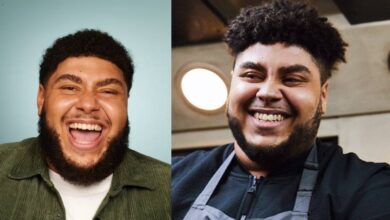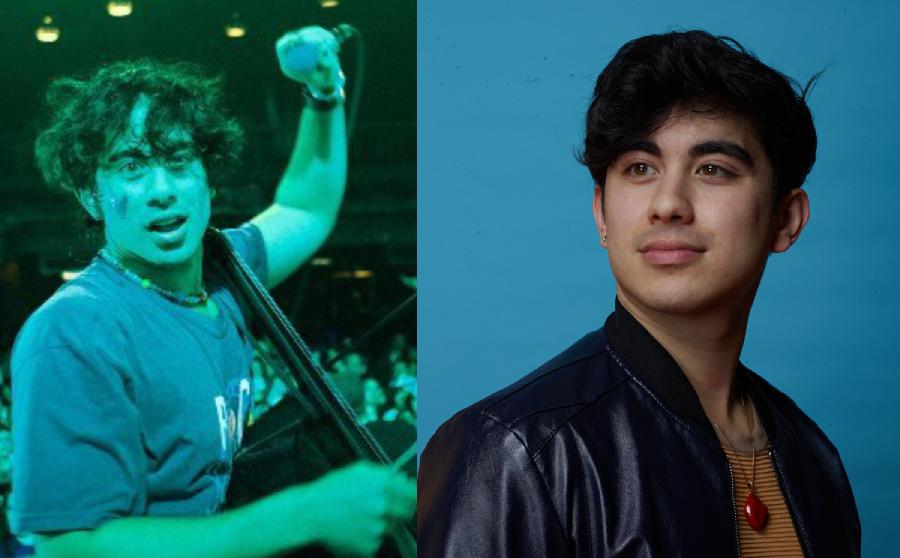
There’s a certain kind of musician who doesn’t quite fit the mold you’d expect, and Calvin Langman is exactly that. He’s the guy who walked into a rock band carrying a cello instead of a bass guitar, and somehow made it work so well that you can’t imagine the sound any other way. As the lead vocalist and electric cellist of The Happy Fits, Langman has spent the better part of a decade proving that the rules of indie pop are a lot more flexible than people assume. What follows is a closer look at who he is, where he came from, and why his story is worth paying attention to.
Who Is Calvin Langman?
Calvin Langman is a Filipino-American songwriter, producer, composer, and the creative engine behind the indie-pop trio The Happy Fits. If you’ve heard the band’s punchy, danceable tracks bouncing around playlists over the last several years, you’ve heard Langman’s signature touch, which usually involves a cello doing the kind of heavy lifting most bands hand off to a bass. He grew up in rural New Jersey, trained as a classical musician for years, and then made the slightly terrifying decision to throw it all into a band that started as a casual summer project. That gamble turned into a career, and today his songs have collectively been streamed over 300 million times, which is a staggering number for someone who never set out to be a pop star in the first place.
Early Life and Filipino Roots
Langman’s story really begins with his mother, Maria, who shaped a lot of who he became. He grew up in a small rural town in New Jersey, and his Filipino heritage runs deep through his mother’s side of the family. Maria grew up in Manila alongside her two brothers, and her own journey to America was anything but easy. She didn’t even meet her mother until she was eight years old, when the family relocated to the United States and settled in Englewood, New Jersey, arriving without knowing any English and building a life from scratch. That immigrant grit clearly left its mark on Langman, who has spoken openly and proudly about his roots. He’s even said it feels meaningful to be someone Filipino kids growing up in America can look up to, which tells you he doesn’t take that part of his identity lightly.
A Classical Music Upbringing
Before the rock band, before the festival stages, Langman was a serious classical kid. He started playing piano when he was six and picked up the cello at eight, and from there his childhood was packed with lessons. His mother would spend her afternoons and evenings driving him and his two older siblings across New Jersey and Pennsylvania to endless practice sessions and instruction, which is the kind of relentless dedication that builds real musicians. By the time he was a teenager, he had the technical chops that most people spend a lifetime chasing. He attended pre-college programs at The New School’s Mannes School of Music and at Juilliard, and later studied at the Conservatory at The Robert McDuffie Center for Strings in Macon, Georgia. In other words, this was a guy on a clear, well-paved path toward a classical career, which makes what happened next all the more interesting.
How The Happy Fits Came Together
The origin story of The Happy Fits is the kind of thing that sounds too casual to have actually launched a career, but here we are. Langman met guitarist Ross Monteith back in their Latin class at North Hunterdon High School in New Jersey, and the two eventually started messing around with original songs together on the weekends. By the end of their senior year, they had written four tracks, and Monteith’s parents generously paid for the pair to record them as a graduation present. Just two days before they were set to lay down the songs, they pulled in Luke Davis, who happened to be the best drummer their school had produced and was conveniently the best friend of Ross’s older brother. They picked the band name on the drive to the studio, recorded their EP, and figured that would be the end of it. It was not.
The Breakout Moment
What turned a one-off recording session into an actual band was a stroke of timing and a little bit of luck. Their debut EP, Awfully Apeelin’, dropped in August 2016, right around the time Langman and Monteith had headed off to the University of Delaware. Then the song “While You Fade Away” got picked up by Spotify’s Fresh Finds playlist, and things moved fast. The track jumped from under 1,000 listens to over 39,000 almost overnight, and within days it climbed to number five on Spotify’s Top 50 Viral USA chart and cracked the global viral chart too. That kind of momentum is hard to ignore, and it forced the three of them to ask a serious question about whether this was something real. In 2017, all three members made the leap, dropped out of college, and committed to the band full-time.
Why the Cello Defines His Sound
Here’s the thing that makes Langman genuinely distinctive in a crowded indie scene: he plays an electric cello where a bass would normally sit. That single choice gives The Happy Fits a texture that’s almost impossible to replicate, because the cello can growl and drive a rhythm one moment and then soar into something melodic and emotional the next. It’s the secret sauce that lets the band sound both bigger and warmer than your average power-pop trio. His classical training feeds directly into this, since all those years of bowing technique and music theory show up in the way he layers parts and writes hooks. Critics have noticed, and NPR Fresh Air’s Ken Tucker famously described him as a first-class chronicler of unrequited love, which is a pretty elegant way of saying the guy knows how to write a sad song you can still dance to.
The Albums and Evolving Songwriting
Langman’s catalog with The Happy Fits tells the story of an artist who keeps growing. The band’s debut album, Concentrate, arrived in 2018 and captured that early, sunny, hyper-melodic energy. Their second record, What Could Be Better, leaned into bright, transportive optimism even as it was recorded against the backdrop of the pandemic. Then came Under the Shade of Green, a more reflective third album written in direct reaction to living through COVID-19 and the wave of events that followed, where the band started using their catchy sound as a kind of Trojan horse to smuggle in heavier themes like loneliness and climate anxiety. Each album shows Langman getting a little braver about pairing real emotional weight with infectious melodies, and that balance between joy and honesty is arguably his greatest strength as a writer.
Lovesick and the Band’s Big Transition
The most dramatic chapter in Langman’s career so far came when the band’s foundation shifted. In early 2024, co-founder Ross Monteith, who had been with Langman since their high school days, announced he was leaving. For longtime fans, the idea of The Happy Fits continuing without one of its original voices felt almost unthinkable, and for the band it was even harder to process emotionally. Out of that grief and upheaval came Lovesick, an album that traded the band’s usual blind cheer for something more raw and honest, with Langman essentially treating the record like a diary of survival. New bandmate Raina Mullen joined the lineup, and rather than collapsing, the band found a fresh chemistry. By all accounts the new crew has settled in nicely, and the success of Lovesick has gone a long way toward proving the band can evolve without losing its soul.
Beyond the Band
Langman isn’t just a frontman, and that’s worth emphasizing. He’s a working songwriter, producer, and composer who’s based in Philadelphia these days, and he’s openly invited collaborators in his own city to reach out and make records with him. His reach extends well past streaming platforms too, since his music has been licensed for a long list of television shows and films, including FX’s Better Things, NBC’s Council of Dads, Netflix’s My Life with the Walter Boys, and even the long-running BBC soap Coronation Street. That kind of placement is a quiet but meaningful sign of respect in the industry, because it means people who curate music for screen actually trust his work to carry emotional scenes. It also points to a career that has more than one engine driving it forward.
The Live Experience
If there’s one place where everything Langman has built really comes alive, it’s on stage. The Happy Fits have a reputation for joyous, high-energy performances that pull together a surprisingly wide age range of fans, and that sense of community is baked right into their shows. Langman has toured internationally for years, selling out venues like Webster Hall in New York City and playing major North American festivals such as Lollapalooza and Corona Capital in Mexico City. There’s a generosity to the way the band performs, with all three members often sharing vocal duties, and you get the sense that Langman genuinely loves being the kind of role model and bandleader he didn’t have growing up. The cello slung across his body, the crowd singing back every word, the unmistakable energy of a band that earned its place the hard way: that’s the heart of what he does.
Conclusion
Calvin Langman is proof that the most interesting careers rarely follow a straight line. He could have stayed on the comfortable classical track that his years of training had laid out for him, but instead he took an electric cello into a rock band and built something genuinely original. Along the way he’s navigated viral success, dropped out of college on a gut feeling, weathered a lineup change that could have ended everything, and come out the other side with a richer, more honest body of work. What ties it all together is a willingness to follow the music wherever it leads, even when that means turning heartbreak and uncertainty into songs people can dance to. For a guy who once kept his songwriting a secret from his parents, Langman has carved out a remarkable place for himself, and the sense is that he’s nowhere near finished yet.
Also Read: Calvin Heimburg